Awards & Analysis / The awards debate
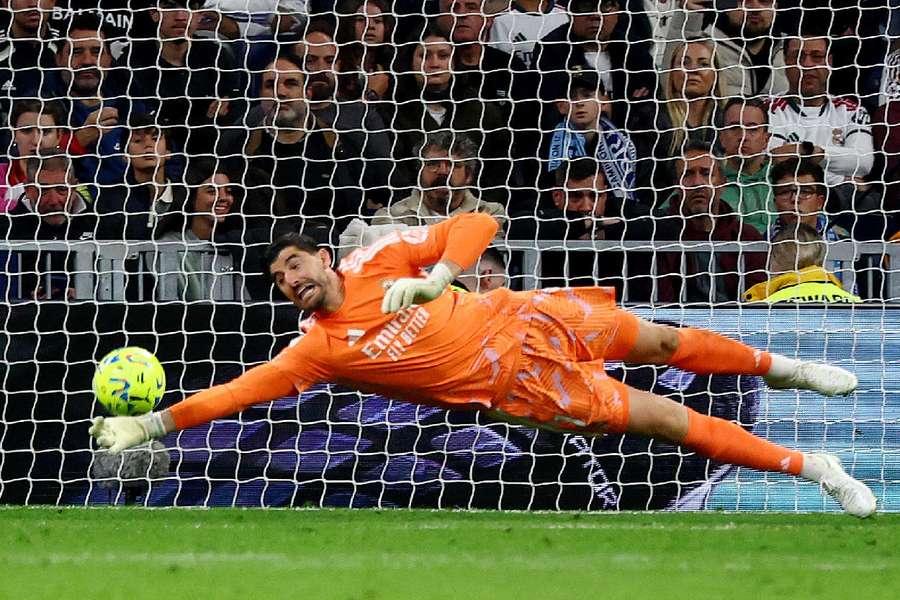
Thibaut Courtois has reopened a question football’s most famous individual prize still struggles to resolve: how does a goalkeeper become the best player in the world in the eyes of its voters?
The Courtois Ballon d’Or debate is rooted in a striking historical imbalance. Lev Yashin remains the only goalkeeper to win the award, in 1963. Speaking on Monday, Courtois said another victory for the position would be difficult and reflected on his own seventh place in 2022.
According to Reuters’ report carried by Flashscore, he accepted Karim Benzema deserved that year’s award. His objection concerned how the goalkeeper’s contribution was ranked alongside other players, rather than an argument that his teammate should have lost.
The record behind the complaint
- 1963
- Lev Yashin wins the Ballon d’Or.
- 2014
- Manuel Neuer finishes third.
- 2022
- Courtois finishes seventh and receives the Yashin Trophy.
Those landmarks expose the distance between being recognised as an exceptional goalkeeper and leading the overall vote. A separate positional trophy provides recognition, but it cannot answer whether a goalkeeper should also rank first across the sport.
Courtois’s concern deserves examination without assuming every individual result was wrong. Historical scarcity identifies a pattern. Assessing a particular winner still requires comparing the actual seasons of the candidates.
The rules do not exclude goalkeepers

France Football’s published 2026 regulations put individual performance first, followed by team achievements, then class and fair play. They do not require goals or assists, and they contain no restriction on a goalkeeper winning.
The men’s award uses an international panel of specialist journalists representing the top 100 countries in the relevant FIFA ranking. Each juror orders ten players from a shortlist of 30, with points determining the result.
The difficult word is decisive
A save can decide a match as directly as a goal. The difficulty lies in explaining what would otherwise have happened. A forward supplies a visible addition to the scoreboard; a goalkeeper preserves a result that might never change.
That difference can affect the story told about a season. It does not make goalkeeping impossible to assess, but it demands attention beyond the most memorable scoring moment.
Paris in 2022 offers a concrete example
Courtois’s Champions League final against Liverpool remains an unusually clear case study. UEFA’s assessment of his season records nine saves in Real Madrid’s 1–0 win. Its account highlights interventions against Sadio Mane and Mohamed Salah.
UEFA also named him Player of the Match. The technical observers emphasised the timing of his saves when Liverpool were threatening, as well as the quality of his late stop from Salah.
That evidence gives substance to his frustration. He was central to the outcome of the biggest club match of the season. Yet one outstanding final is only part of an annual assessment, so the argument must also account for the months around it.
The useful question is how voters connect those two scales: a decisive night and sustained performance. Goalkeepers deserve that examination as carefully as forwards do.
Why the assessment period matters
The 2026 regulations cover performances from 3 August 2025 to 19 July 2026, including international tournaments. That defined window matters because it asks voters to judge a particular season, rather than reward a reputation built across an entire career.
For goalkeepers, whose most celebrated moments may be spread across many years, the distinction is useful. A convincing candidacy needs evidence from the period under review. Previous finals can explain a player’s standing, but they cannot substitute for current performance. The same standard should apply when a famous forward’s reputation competes with a less familiar goalkeeper’s exceptional year. Names should not decide.
Better comparisons require better questions
Goalkeeper recognition need not depend on creating a special exception. It can begin with a more complete account of the work being judged.
- What quality of chances did the goalkeeper face?
- How often did interventions preserve a competitive match?
- Did decision making help the team control space?
- How consistently did the player perform across the season?
Raw clean sheets cannot answer all of those questions. They reflect collective defending as well as the goalkeeper. Save totals require context too, because a busy goalkeeper and a well-protected one face different opportunities to impress.
Attacking statistics also need interpretation. The purpose of a broader assessment would be to apply comparable care to every position, then explain the judgment openly.
An award for the whole pitch
Courtois has not supplied a formula that guarantees a goalkeeper should win. He has identified a challenge the award’s own criteria should be capable of meeting.
If decisive individual performance is the leading test, preventing defeat must remain a serious route to recognition. The next goalkeeper with an exceptional season should not have to prove that the position belongs in the debate before their football can be judged.