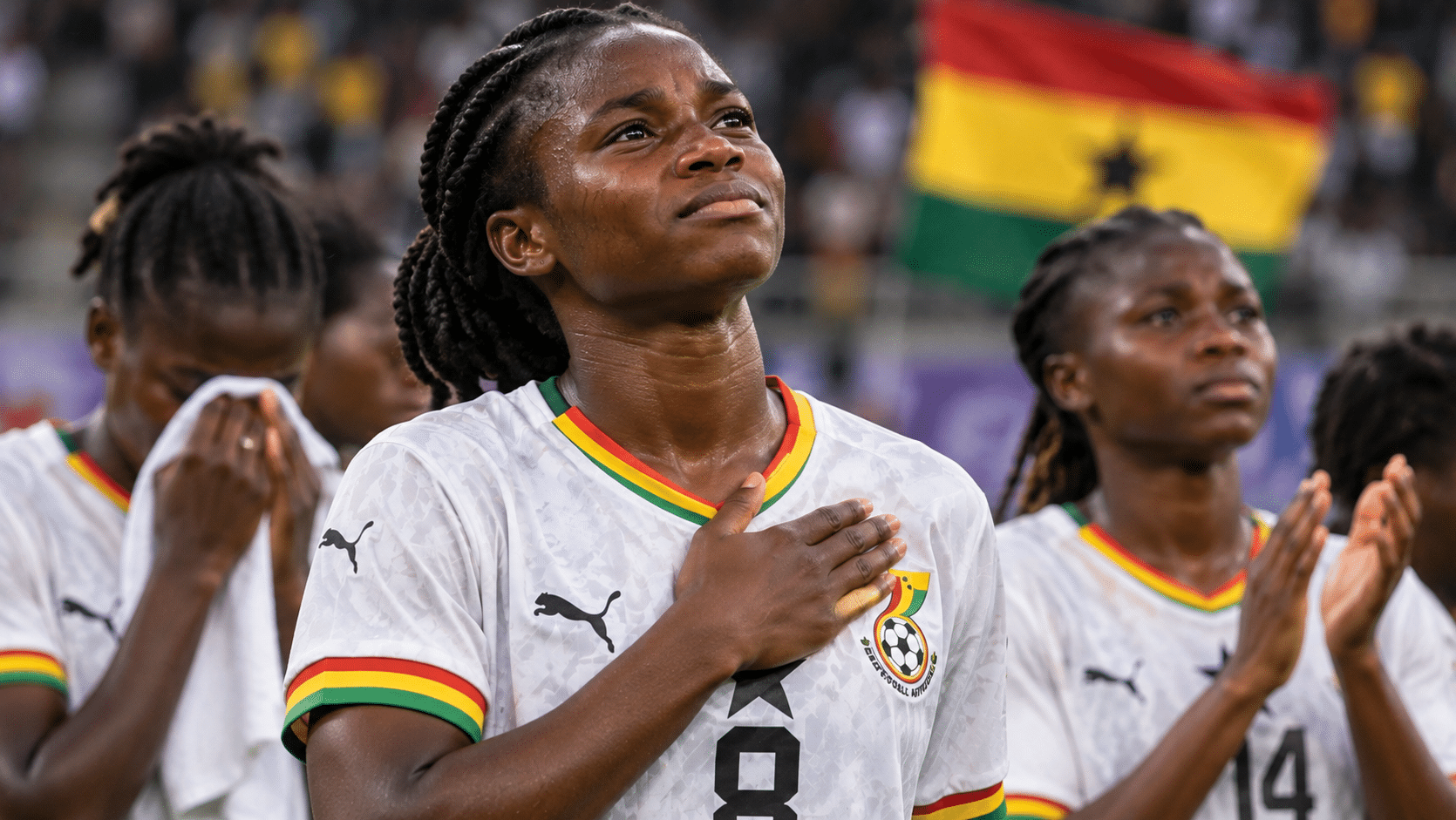
Ghana’s under-17 side exited at the quarter-final stage, but Adarkwa has emphasized the team’s effort and development.
Ghana Black Maidens is at the centre of a story that reaches beyond one headline. Ghana’s under-17 side exited at the quarter-final stage, but Adarkwa has emphasized the team’s effort and development.
The immediate question is what the development means in practical football terms. Youth international football is both a competition and a critical stage in developing players for senior teams.
There is also a distinction between what has been reported and what can be established. A tournament exit should be assessed alongside the level of opposition and the longer-term pathway for young players.
The football behind the headline
Youth international football is both a competition and a critical stage in developing players for senior teams. This is where the discussion becomes more useful than a simple reaction to a result or a quote.
Coaches and players must make decisions under pressure. They balance the urge to attack with the need to retain shape, and they must judge when a direct approach is more effective than patient possession.
The influence of Adarkwa and Under-17 Women’s World Cup should be considered within that broader setting. Individual names attract attention, but collective organisation often decides whether a plan works.
What has changed
Ghana’s under-17 side exited at the quarter-final stage, but Adarkwa has emphasized the team’s effort and development. The development gives supporters a clear reason to reassess the next few matches, but it does not settle every question surrounding the club or competition.
The context matters. Football stories rarely unfold in isolation: preparation, squad depth, recent results and the quality of upcoming opponents can all alter the significance of a single announcement.
For Ghana Black Maidens, the priority is to respond to the circumstances in front of them rather than to the wider noise around the story.
What to watch next
The next meaningful evidence will come from official updates and performances on the pitch. Team selection, tactical adjustments and the response to setbacks will offer more than speculation.
Watch the balance between initiative and control. A side can appear comfortable for long periods and still become vulnerable when it loses the ball in the wrong area.
Youth international football is both a competition and a critical stage in developing players for senior teams. The key is whether that idea survives the demands of competitive matches rather than simply sounding convincing before kick-off.
Why the timing matters
Timing changes the weight of every football decision. Early in a season, teams have room to experiment. As fixtures accumulate, mistakes become more costly and recovery periods become shorter.
It is tempting to turn every new development into a sweeping verdict. That would miss the detail. A tournament exit should be assessed alongside the level of opposition and the longer-term pathway for young players.
Supporters may reasonably debate the direction of events, yet a careful reading leaves space for new information. One match, one interview or one selection is rarely the whole story.
A wider perspective
The larger lesson concerns expectations. Clubs and players are judged against past achievements, financial resources and the standards set by their rivals. Those comparisons are useful only when applied carefully.
Ghana Black Maidens now have a narrative to answer. Some details are established; others remain open. Readers should resist treating reported possibilities as settled facts.
For now, the most defensible assessment is a measured one: the development deserves attention, but the next phase will determine its lasting importance.