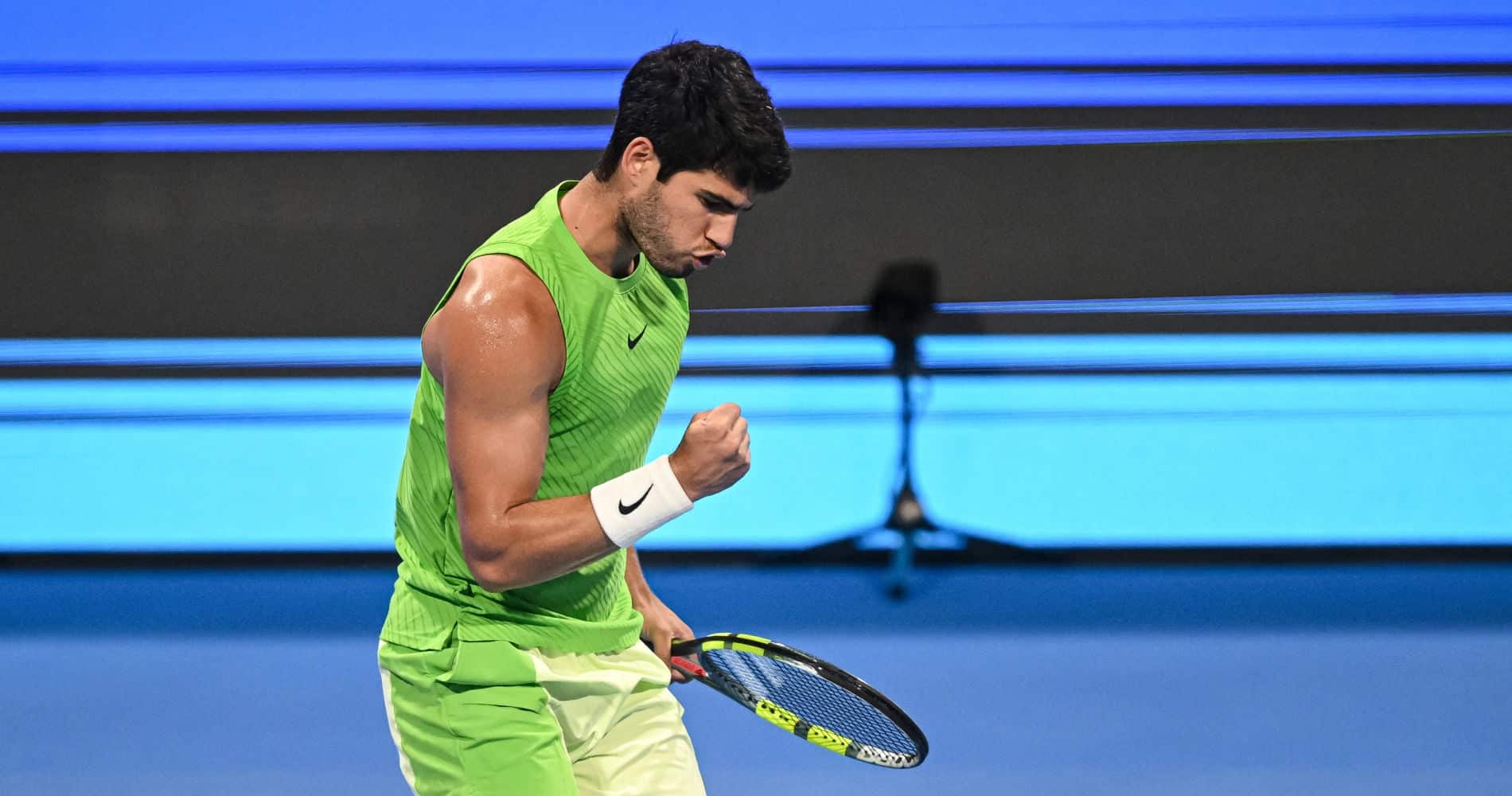
The Qatar Open in Doha has delivered a final that feels both fresh and inevitable. Fresh because Arthur Fils is still establishing himself as a week-to-week force at the top end of the tour. Inevitable because his talent has been obvious for a while, and his performance in the semi-final made it clear he is not in Qatar to “gain experience.” He is there to win.
Fils booked his place in the final with a mature, controlled victory over Jakub Mensik, winning 6-4, 7-6(4). On the other side of the draw, Carlos Alcaraz advanced by beating defending champion Andrey Rublev 7-6(3), 6-4. The result is a final built on contrast: Alcaraz as the polished, proven superstar, and Fils as the high-ceiling challenger arriving with momentum and belief.
Fils Wins the Tight Moments, Not Just the Points
On paper, the semi-final was close. In reality, Fils handled it like a player who has learned how to manage pressure. He took the first set with purposeful aggression, mixing pace with smart placement and refusing to let Mensik settle into a rhythm. When the match tightened in the second set, he didn’t blink. That’s the detail that matters in a semi-final at this level.
Mensik came into the match with confidence and deserved attention after his earlier win over Jannik Sinner in Doha. He has a big serve, he likes to dictate early, and he’s already comfortable playing “fast tennis” on quick hard courts. But Fils neutralised the danger by staying compact in his return position, choosing the right moments to step in, and defending break points with calm, repeatable patterns.
One of the most telling stats from the match was how hard it was to break Fils. He faced pressure, but he kept saving himself with first serves, early forehands, and decisive movement forward when needed. That’s not just talent. That’s match IQ.
A Reminder: This Run Comes After a Tough Year
What makes this Doha breakthrough even more impressive is the context around Fils’ last 12 months. The 21-year-old has had to rebuild after a difficult injury spell, including a back fracture that halted his momentum last season. Coming back from a problem like that is rarely simple. It tests patience, training discipline, and confidence.
In Doha, he has looked like a player who has done the work properly. His movement is sharp. His timing is clean. And the big strokes are landing with authority. He is not playing “survival tennis.” He’s playing with intent, which is usually the best sign that the body is cooperating and the mind is free.
Reaching the final also marks a significant milestone in his career development. It is his fifth ATP final, and it arrives at a time when the tour is evolving, with younger players stepping into bigger stages more quickly than ever. Fils is clearly aiming to be part of that next wave, not a footnote to it.
Alcaraz Arrives as the Benchmark
Then there is Alcaraz. He has carried himself in Doha like the standard-bearer he is. His semi-final win over Rublev was a strong example of what separates elite players: he stayed calm through swings of momentum, absorbed pressure, and still closed the match in straight sets.
Rublev pushed, saved multiple match points, and refused to go away. Yet Alcaraz remained composed, kept his patterns clear, and trusted his execution in the biggest points. That ability to keep decision-making stable under stress is what turns great athletes into champions.
For Fils, this is the opportunity and the challenge. Alcaraz will not offer cheap points. He will test the full court. He will change tempo. He will ask hard questions: Can you finish at the net? Can you defend wide? Can you stay patient when the rally goes long?
What the Final Could Come Down To
This final has a simple storyline, but the details will decide it. For Fils, the mission is to serve well, take the first strike when it’s available, and avoid drifting into passive rallies where Alcaraz can control the geometry. If Fils can keep points short on his terms, he can make this uncomfortable.
For Alcaraz, the goal is to extend exchanges, pull Fils into different court positions, and apply sustained pressure on the return games. Alcaraz has an extra gear when the match becomes a problem-solving exercise. He also has the proven advantage of closing finals, which is a skill on its own.
No matter who lifts the trophy, Doha has already delivered something valuable: a final that signals where men’s tennis is heading. Alcaraz remains the headline act. But Fils is making it clear he wants a permanent seat at the top table.