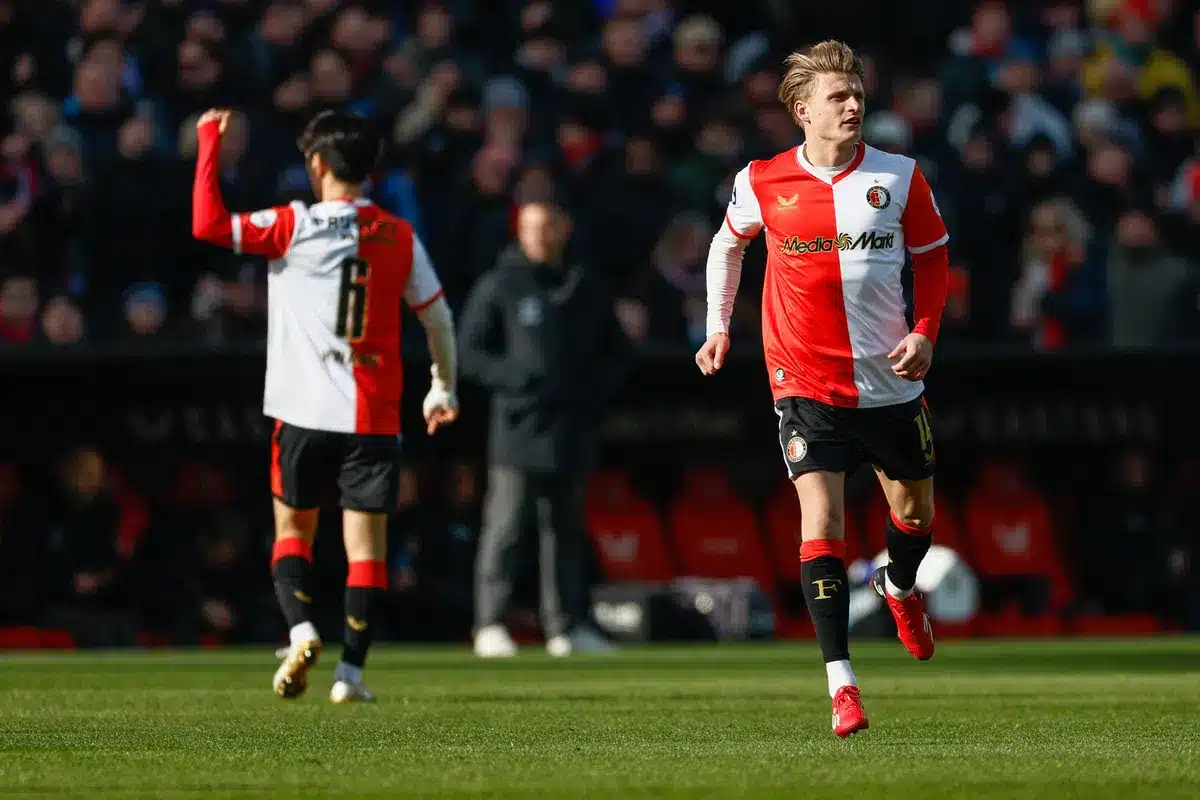
Feyenoord have built much of their season around control: control of tempo, control of transitions, and control of the midfield zones that decide big matches. That is exactly why the latest injury update lands so heavily. The club will be without midfield duo Sem Steijn and Oussama Targhalline for a significant period, forcing manager Robin van Persie into a difficult, very real test of squad depth and tactical flexibility.
In short: Feyenoord did not just lose two names. They lost two solutions. And at this stage of the campaign, solutions matter more than sentiment.
What Happened: One Match, Two Major Setbacks
The story began in Feyenoord’s recent 1-0 win over Go Ahead Eagles, a result that looked positive on the surface but came with an expensive price. Targhalline was forced off after a rough tackle that left Feyenoord down a midfielder and scrambling to reshuffle. Steijn then entered the match as a replacement, only for the situation to become worse.
Steijn managed only 28 minutes before being withdrawn again at half-time. He had already been dealing with a knee issue and aggravated it during that short cameo. Subsequent scans confirmed the severity: Steijn’s injury requires meniscus surgery. In football terms, that almost always means weeks turning into months.
Targhalline’s absence is also expected to last a number of weeks. The injury came after a challenge that was deemed serious enough to result in a red card for the opposing player. Feyenoord’s medical staff will now manage his recovery carefully, but the key point remains: he will not be available when the schedule demands stability.
Why Steijn’s Injury Is Especially Disruptive
Steijn is not just “a midfielder.” He is one of the most productive players Feyenoord have relied on for output and decisive actions. He arrived with momentum, having been last season’s Eredivisie top scorer, and the expectation was clear: he would add goals from midfield and raise Feyenoord’s attacking ceiling.
When you lose that profile, you lose two things at once:
- End product from central areas (late runs, second-ball finishing, composure in the box).
- Game-state control, because teams have to respect the threat he carries between lines.
Those are not qualities you replace with a single substitution. They are usually replicated through a system change, a role adjustment, or a combination of multiple players. That is why this injury is so significant. It forces not just a lineup change, but a rethink of how Feyenoord attack and manage matches.
Targhalline’s Absence Removes Balance
Targhalline may not have the same headline reputation as Steijn, but he plays a role that often determines whether a team can sustain pressure. His presence helps with recycling possession, covering spaces behind attacking midfielders, and making sure Feyenoord can reset quickly after losing the ball.
When you remove that stabiliser, the team can become stretched. Attacks may look slightly more chaotic. Defensive transitions become more demanding. The centre-backs face more direct runs. The margins narrow.
This is where fans often underestimate the impact. Goals and assists are visible. Balance is not. But in a league where tiny errors are punished, balance can be the difference between winning 1-0 and dropping points in a match you controlled.
Depth Is Now a Strategic Issue, Not Just a Squad Problem
Feyenoord’s concern is amplified because the injury list is already crowded. Several other players are currently unavailable, including Leo Sauer, Givairo Read, Thomas Beelen, Gernot Trauner, Malcolm Jeng, and Shaqueel van Persie. That matters because injuries rarely arrive politely in isolation. They arrive in clusters, and then the calendar starts asking harder questions.
For Robin van Persie, the immediate challenge is selection. The longer-term challenge is sustainability. Can Feyenoord protect their midfield structure for weeks? Can they maintain pressing intensity without burning out replacements? Can they still create enough goals without Steijn’s timing and output?
These are not philosophical questions. They are operational ones. They will shape how Feyenoord approach upcoming fixtures, how they rotate, and how they manage match minutes for key players who suddenly become irreplaceable.
What Feyenoord Can Do Next
There are three practical levers Feyenoord can pull:
- Role redesign: use a different midfielder profile higher up the pitch and distribute goal responsibility across wide players.
- System adjustment: tweak the midfield shape to protect central zones and reduce transition exposure.
- Game management: win matches in a less “pretty” way more compact phases, better set-piece focus, and controlled risk.
None of these options is perfect. But top clubs are judged by how they respond when the plan breaks. Feyenoord now have an opportunity to prove they are not dependent on one configuration to compete.
The injury news is unquestionably a blow. Still, the season will not be defined by what happened in one match. It will be defined by what Feyenoord do with the next ten. If they adapt quickly, they can keep their objectives alive. If they hesitate, the table will not wait.