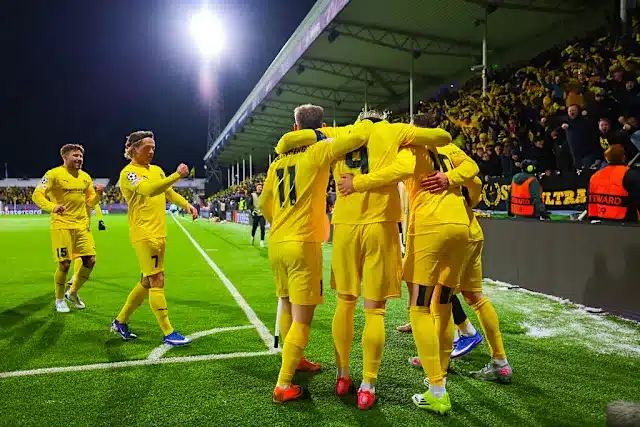
The UEFA Champions League is built for power clubs, superstar squads, and predictable narratives. Yet every season, one or two nights arrive that tear up the script. This week delivered exactly that. Bodø/Glimt produced another giant-killing performance to stun Inter, while Désiré Doué reminded everyone that the biggest stages can accelerate a young career in a single evening.
For executives watching elite sport as a leadership case study, this round offered a familiar lesson: resources matter, but execution matters more. Underdogs don’t win by hoping. They win by solving problems faster and playing with conviction when the pressure peaks.
Bodø/Glimt vs Inter: A Statement Win That Wasn’t a Fluke
At this point, Bodø/Glimt’s rise in Europe can’t be dismissed as a “nice story.” Their 3-1 win over Inter was the latest proof that the Norwegian champions are not simply surviving the competition. They are shaping it.
Inter arrived as the bigger club, with the deeper bench and the heavier expectations. But Bodø/Glimt controlled key phases of the match, especially in transitions and in the moments where composure usually separates elite teams from ambitious ones. The home side struck first through Sondre Brunstad Fet, and even when Inter levelled through Pio Esposito, Bodø/Glimt never looked intimidated.
The decisive spell came late. Inter pushed, but Bodø/Glimt punished defensive mistakes with ruthless efficiency. Jens Petter Hauge and Kasper Høgh turned pressure into goals, flipping the match from “tight contest” to “famous win.” Høgh’s night was especially impressive: he combined intelligence, movement, and end product, contributing assists and then finding the net himself.
What makes this result resonate is the pattern around it. Bodø/Glimt have already shown they can upset major names. This is no longer a one-off. It’s a system, a culture, and a belief that travels.
Why Bodø/Glimt Keep Doing This
There are a few repeatable principles behind their success:
- Clarity of identity: they know how they want to play, and they commit to it.
- Collective intensity: they run as a unit, press as a unit, and recover as a unit.
- Bravery in decisive moments: they don’t just defend history; they try to make it.
The second leg at the San Siro will be a different challenge. But Bodø/Glimt have already done the hardest part in Europe: they’ve convinced themselves they belong.
PSG Escape Monaco: Doué Turns Pressure Into Opportunity
If Bodø/Glimt represented the night’s “system story,” then Paris Saint-Germain represented the night’s “superstar story.” PSG found themselves in trouble against Monaco, trailing and looking vulnerable. Then Désiré Doué stepped into the spotlight.
There’s a particular kind of player who grows when the match becomes uncomfortable. Doué looked like that player. He carried the ball with confidence, demanded involvement, and injected urgency into PSG’s attacking phases. Monaco had reasons to believe they could finish the job, but PSG’s quality eventually told—helped by a young talent playing with fearless clarity.
For PSG, this kind of win can matter psychologically. Not because it was beautiful, but because it was messy and survived. In knockout football, teams often need at least one “escape” performance to build resilience for the later rounds.
The Bigger Theme: Champions League Nights Are Still Defined by Moments
This is the most consistent truth in the competition. Tactical plans matter. Depth matters. But the Champions League is still shaped by moments: one defensive lapse, one set-piece execution, one young player deciding to take responsibility.
Inter will argue they controlled long phases and can overturn the tie at home. That may be true. PSG will argue they found a way under pressure. That is also true. But the story of the week remains the same: a so-called underdog produced a performance that forces the “big club” to chase in the return leg.
And that changes everything.
What to Watch in the Second Legs
Looking ahead, the second legs will be less about headlines and more about discipline:
- Can Bodø/Glimt manage game state? A two-goal advantage is powerful, but it demands calm decision-making under sustained pressure.
- Can Inter stay patient? Chasing too early can create exactly the spaces Bodø/Glimt love to attack.
- Can PSG turn survival into control? Escaping once is useful; dominating the second leg is a different statement.
- Will Doué back it up? The next step for any young star is repeating the impact, not just creating it once.
The Champions League is marketed as a competition of giants. Nights like this are the reminder it’s also a competition of courage—of teams and players willing to seize the moment instead of waiting for permission.